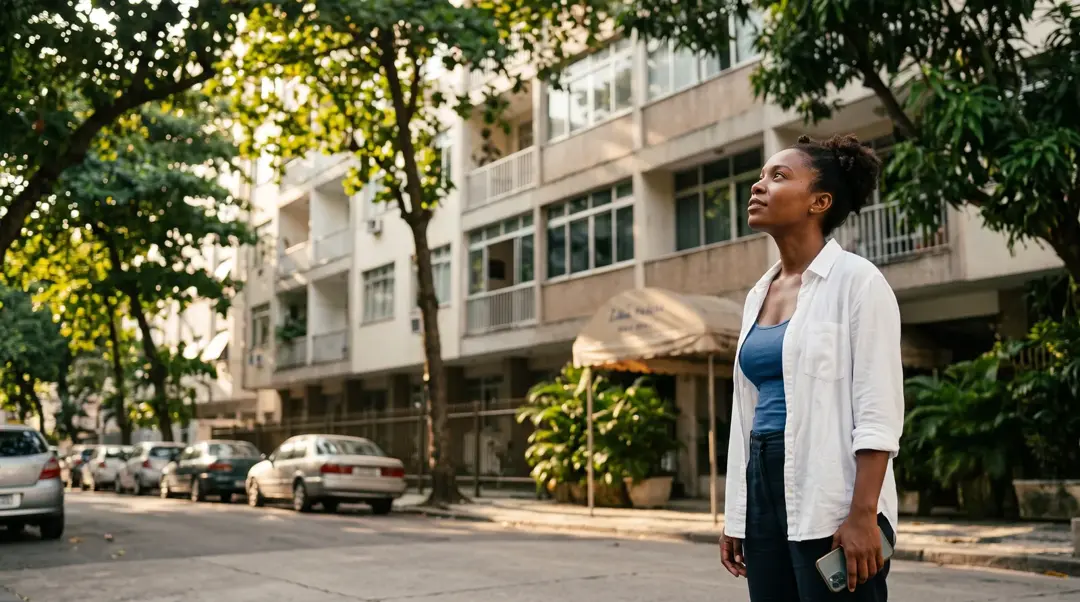
Yes, you can own it. A foreign national buys property in Panama in their own name, holds the title in their own name, and sells, mortgages, leases or bequeaths it with the same rights a Panamanian citizen has. No residency requirement, no local partner, no nationality quota, no workaround structure. That is unusual enough in Latin America that it is worth saying plainly before anything else.
So the real questions are what it costs and what you actually get. The transfer tax is 2%, it is assessed on the land or cadastral value rather than your purchase price, and the seller is the party who files it. Ownership itself comes in two very different forms in Panama, and knowing which one you are looking at is the single most valuable thing on this page. And if you are buying at USD $300,000 or above, the same purchase can carry you into permanent residency. This guide walks all three, on the documents the institutions themselves publish.
Key takeaways
- The transfer tax is 2%, calculated on the land or cadastral value rather than your purchase price. Dirección General de Ingresos, Formulario 106, checked August 2026.
- The seller files both tax forms. Form 106 for the transfer tax and Form 107 for capital gains are presented by the seller, and must be paid within the same calendar month as the declaration. DGI, checked August 2026.
- A foreigner can hold title personally, with the same rights of sale, mortgage, lease and inheritance as a citizen.
- The Qualified Investor residency threshold for real estate is B/.300,000, on a property free of liens, and the money must come from a foreign source. Decreto Ejecutivo 193 of 15 October 2024, Articles 1 and 2.
- You may still mortgage the excess. The same article permits financing the remainder through a local bank loan where you have paid B/.300,000 liquid on a property worth more.
- Buying under that route requires two certifications you should be pulling anyway: title from the Registro Público, and value from ANATI.
What the transfer costs, and who pays which part
The Dirección General de Ingresos publishes the transfer tax as 2%, assessed on el terreno o valor catastral, the land or cadastral value. That second half matters more than the rate. Cadastral value is the figure registered for tax purposes, and on older properties it frequently sits well below what you are paying. The tax follows the registered value, not the price on your contract.
Two forms go with a sale:
| Form | What it covers | Who files |
|---|---|---|
| 106 | Transfer tax, 2% of land or cadastral value | Seller |
| 107 | Capital gains | Seller |
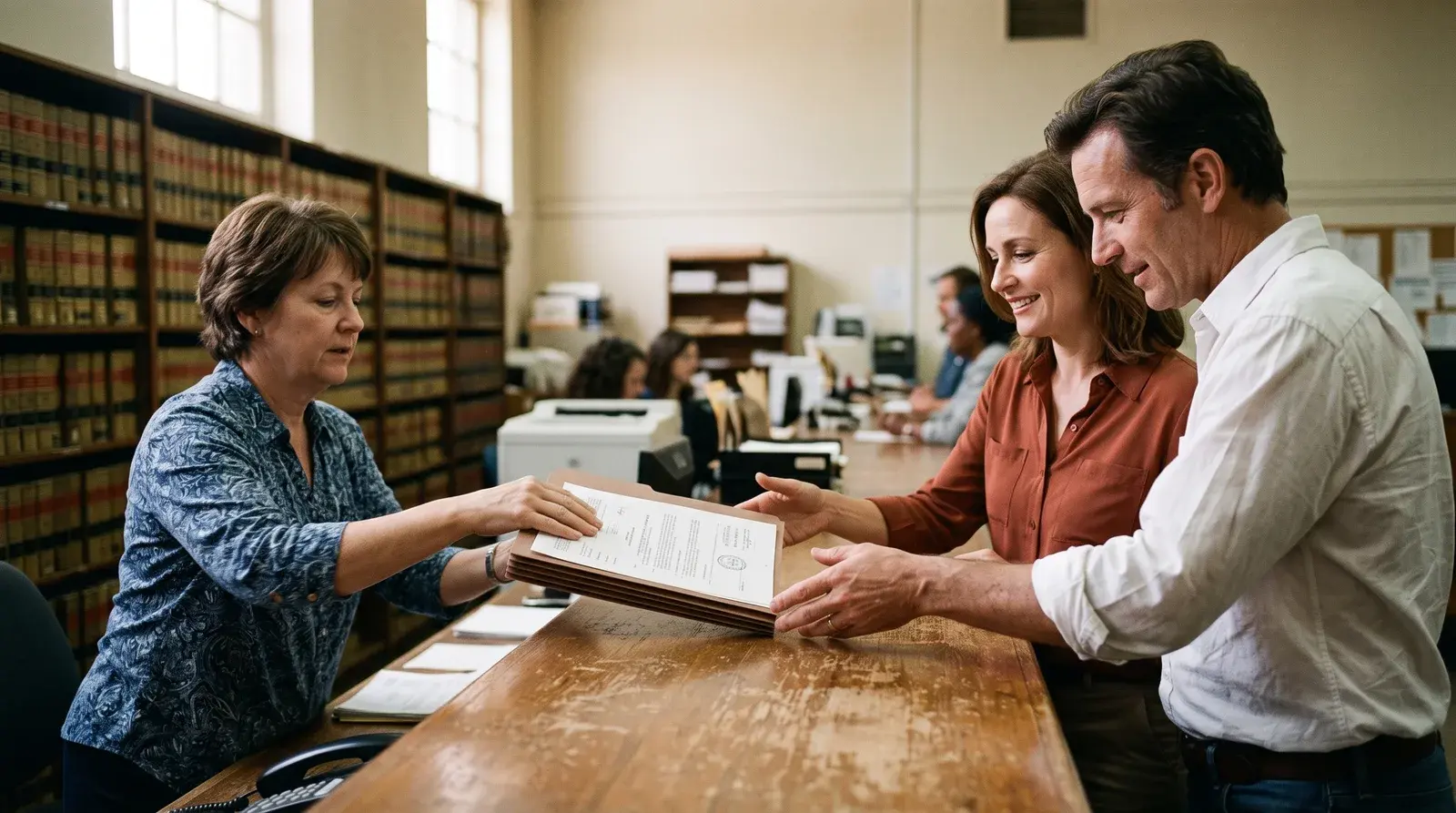
Both must be declared and paid within the same calendar month as the declaration, and both have to clear before the deed can be recorded at the Registro Público. That sequencing is the practical point for a buyer. You are not the filer, but you are the one who cannot register ownership until the seller has filed. A seller who is slow, disorganised or short of cash becomes your problem at exactly the moment your money has moved.
So the number to negotiate is not who pays the transfer tax. It is what happens to your deposit if the seller has not filed by an agreed date. Put that date and that remedy in the contract and this whole section stops being a risk.
Attorney, notary and registration fees sit on top of the tax and vary by transaction and by firm. Ask for them as a written quote before you engage anyone, the same way you would at home.
Holding it personally, or through a company
Personal name is simpler and cheaper, and it is what most first-time buyers use for a home they intend to live in. A Panamanian company adds annual maintenance and accounting, and earns its keep on investment holdings, on anything with several owners, or where estate planning matters. Neither choice affects your right to own.
If the residency route below matters to you, note that Decreto Ejecutivo 193 accommodates both. The investment may be made a título personal o a través de una persona jurídica, personally or through a legal entity, provided the applicant is always the final beneficiary of the entity holding it. Article 3A goes a step further and allows co-ownership, so long as the co-owners are a spouse or dependants and they are among the final beneficiaries. A company is not a workaround here; it is an expressly contemplated structure.
One geographic limit is worth raising with your lawyer early: titled land within 10 kilometres of an international border is treated as off limits to foreign ownership. If your search runs near the Costa Rican or Colombian frontier, have your attorney confirm the parcel's position against the constitutional text before you commit. Everywhere else in the country, this simply does not come up.
Titled land versus Rights of Possession
This is the distinction worth the most money to you in Panama, and it is where a local friend earns their keep.
Titled land is registered at the Registro Público with a finca number. There is a public record of who owns it and what is charged against it. You can search it, insure it, and mortgage it.
Rights of Possession, derecho posesorio, is a recognised right to occupy land the state still owns. It can be bought and sold, and it is often marketed in the same language as titled property, at prices that look like a bargain. It is not ownership. A bank will not mortgage it, and converting it to title runs through ANATI, the national land titling authority, on a timeline nobody will guarantee you.
Coastal and island land is where this shows up most. A waterfront lot priced well under the titled market usually is Rights of Possession, and the gap is the word on the paperwork. That does not make it unbuyable. Plenty of people live very happily on it. It makes it a different asset, priced accordingly, and something to go into with your eyes open rather than by accident.
There is a neat test for either case. The residency route below makes you prove title: Decreto Ejecutivo 193 requires a Registro Público certification of ownership and an ANATI certification of value. If a property cannot produce both, it does not qualify, which is a sensible bar to hold it to even if the visa is of no interest to you. Our guide to titled land versus Rights of Possession shows exactly what to ask for and where it comes from.
Do you need a broker in Panama?
We'll put you with a licensed one who actually works the area you're reading about. They'll tell you what's for sale, what it's really selling for, and which titles are clean before you commit to anything.
Email or phone, whichever you’d rather. We pass your details to one licensed broker and no one else, and there’s no newsletter.
Know your budget and timeline already? Send those instead and get a shortlist →
The $300,000 residency threshold
Buying property is one qualifying route to permanent residency as an Inversionista Calificado, a Qualified Investor.
Decreto Ejecutivo 193 of 15 October 2024, which amends Decreto Ejecutivo 722 of 2020, sets it out in Article 3.1: a foreign national who invests from B/.300,000 in the purchase of property in Panama, free of liens (libre de gravámenes), is eligible. Balboas are pegged to the dollar at 1:1, so that is USD $300,000. Article 2 as amended adds a condition that applies across every route and is easy to miss: the money must be proveniente de fuente extranjera, from a foreign source.
The lien rule and a mortgage are not in conflict, and the decree says so itself. The same paragraph that requires the property to be free of liens goes on to provide that where the applicant proves they have paid the B/.300,000 suma líquida on a property worth more than the threshold, they may finance the remainder through a mortgage loan with a local bank. The rule is not "never encumber the property". It is "B/.300,000 of unencumbered, foreign-sourced money has to be genuinely in it". Read that way the two sentences do the same job. This is worth stating plainly because the two sentences sit back to back in the decree and read, at a glance, as though they cancel each other out.
Real estate is the cheapest of the three qualifying routes, and by some distance:
- Real estate$300k
- Securities$500k
- Fixed deposit$750k
Decreto Ejecutivo 193 de 15 de octubre de 2024, art. 3 · balboas pegged 1:1 to USD · all three require funds from a foreign source · checked August 2026
Each carries its own conditions. Real estate must be free of liens and needs the two certifications above. The securities route runs through a brokerage licensed by Panama's Superintendencia del Mercado de Valores, in issuers whose business touches Panamanian territory and through the Bolsa de Valores de Panamá, with the holding maintained at least five years. The fixed deposit needs a five-year minimum term at a general-licence bank, free of encumbrances, with the funds coming from a foreign source.
If the residency is what you are after and the property is incidental, look hard at those other two routes before you buy a building you did not want. And if you want the home anyway, the residency is a bonus attached to a decision you were making regardless, which is the comfortable way to arrive at it.
About the October 2026 date
You will see the real-estate threshold described as rising to $500,000 on 15 October 2026, so here is where that stands. We read Decreto Ejecutivo 193 in full, all five pages of the Gaceta Oficial text, in the scanned original. It contains no sunset date and no scheduled increase. Article 6 is the only provision on timing and it says only that the decree takes effect on promulgation. The B/.500,000 figure inside it is the securities route in Article 3.3, and B/.750,000 is the fixed deposit in Article 3.4.
The date does have a plausible origin. The decree's preamble cites Decreto Ley 3 of 2008, whose Article 20 requires the Executive to review the minimum investment amounts every two years. Decree 193 is dated 15 October 2024, so the next review falls due on 15 October 2026. A review is a date on which the government is obliged to look at the numbers. It may raise them, lower them, or leave them where they are.
None of which means the threshold will never move. It means that as of August 2026 the number in force is B/.300,000, and if you are timing a purchase around a possible change, you are timing it around a review rather than a scheduled rise. Worth knowing which one you are planning against.
The sequence, in order
- Engage your own attorney first. Not the seller's, not the agency's. This single decision determines whether the rest of the list gets done properly.
- Title search at the Registro Público. Confirms the seller is the registered owner, and surfaces mortgages, liens and embargoes against the finca.
- Establish whether it is titled or Rights of Possession. Ask for the answer in writing. A seller who will not put it in writing has told you something useful.
- Promesa de compraventa, the promise-to-purchase contract, with the deposit held somewhere that is not the seller's account and the release conditions written down.
- Escritura pública, the public deed, executed before a notary.
- Seller files DGI Forms 106 and 107 and pays. Registration cannot proceed until this clears.
- Registration at the Registro Público. You are the owner at this step. Not at signing, not at handover of keys.
The stretch between steps 5 and 7 is the one to watch, because it feels finished and is not. Our step-by-step buying process guide covers each stage in detail, including what your attorney should be handing you at each one.
Before you sign
A short list of things worth settling while you still have leverage.
Get the title status in writing. Titled or Rights of Possession, on paper, from the seller, before the deposit moves. Rights of Possession can be a perfectly rational lifestyle purchase at a discounted price with the position understood. It is a poor surprise.
Ask for a bank guarantee on pre-construction. Panama's own residency decree sets the standard: where the investment runs through a promise-to-purchase on an unbuilt unit, Article 3.2 requires a bank performance guarantee covering the full value of the investment, renewed and presented annually until the property is built, segregated and registered in the investor's name. The decree also spells out when the investor may call on it, namely where the developer misses the construction, segregation or registration deadlines or is in substantial breach of the promise-to-purchase. The government does not take a developer's word on an unbuilt property, and that is a fair benchmark for your own contract.
Watch for assignment clauses on pre-construction. Under the same article, rights under the promise-to-purchase cannot be assigned before the property is registered in the investor's name without prior written notice to the Ministerio de Comercio e Industrias. If a developer's contract lets them assign your position freely, that is worth questioning whatever route you are on.
Treat cadastral value as a tax figure, not a valuation. It governs your transfer tax, and on an older property it can sit far below the price you are paying. It is a number kept for a different purpose, and it will be reassessed.
Write the deposit conditions down. Who holds it, what releases it, and what happens if the seller misses the filing date in step 6.
Which route fits you
- You want a home to live in, in a titled development or a city building: hold it in your own name, follow the seven steps, and the whole thing is closer to a European purchase than you expect.
- You are drawn to coastal or island land at a price that seems generous: start with titled land versus Rights of Possession before you fall for a lot.
- You are buying at or above B/.300,000 anyway: structure the purchase to satisfy Decreto Ejecutivo 193, keep the funds traceable to a foreign source, and collect the residency alongside the house.
- You want the residency more than the property: compare the securities and fixed-deposit routes first.
- You want the full mechanics of each stage: the buying process guide is the long form of the sequence above.
Your next step
The law is the easy part. The part that is specific to you, which property, which title status, which structure, and whether it clears the residency bar, is a short conversation with someone who has pulled these certifications before. Tell us your budget, your timeline and the towns you are looking at, and we will come back with properties that fit and the title position on each one. That is what the form below is for, and asking costs nothing.
Frequently asked questions
Can a foreigner own property in Panama outright?
Yes. A foreign national can hold property in their own name with the same rights as a citizen: buy, sell, mortgage, lease and bequeath. No residency, local partner or nationality quota applies. The one geographic limit to raise with your attorney is titled land within 10 kilometres of an international border, which is treated as off limits to foreign ownership, so have the parcel's position confirmed if you are buying near the Costa Rican or Colombian frontier.
What is the property transfer tax in Panama, and who pays it?
The Dirección General de Ingresos publishes it as 2%, assessed on the land or cadastral value rather than your purchase price. The seller files it on Form 106, alongside capital gains on Form 107, and both must be paid within the same calendar month as the declaration. As a buyer you are not the filer, but registration of your deed cannot proceed until the seller has filed and paid.
Can I get a mortgage on a property I am using for the $300,000 residency route?
Yes, on the excess. Article 3.1 of Decreto Ejecutivo 193 requires the property to be free of liens, and then expressly provides that where you have paid the B/.300,000 liquid on a property worth more than the threshold, you may finance the remainder through a mortgage loan with a local bank. So the rule is not that the property can never carry a mortgage; it is that B/.300,000 of unencumbered, foreign-sourced money has to be genuinely invested in it. Have your attorney confirm the structure before you sign, since the certification is issued by the Ministerio de Comercio e Industrias on the facts you present.
Does the investment money have to come from abroad?
Yes. Article 2 of Decreto Ejecutivo 722 as amended by Decreto Ejecutivo 193 requires the minimum investment to be proveniente de fuente extranjera, from a foreign source, and the condition runs across all the qualifying routes. For the fixed-deposit route the bank's certification has to state it explicitly. Keep the transfer trail clean and documented from the outset, because it is easier to evidence at the time than to reconstruct later.
Is the $300,000 residency threshold rising to $500,000 in October 2026?
The decree that sets it does not say so. Decreto Ejecutivo 193 of 15 October 2024 puts the real-estate minimum at B/.300,000 and contains no sunset date and no scheduled increase; Article 6, the only timing provision in it, says the decree takes effect on promulgation. The B/.500,000 in that decree is the securities route and B/.750,000 is the fixed deposit. The 2026 date most likely traces to Decreto Ley 3 of 2008, which obliges the Executive to review minimum investment amounts every two years, making 15 October 2026 a review date rather than a legislated rise.
What is the difference between titled land and Rights of Possession?
Titled land is registered at the Registro Público with a finca number, so ownership and any charges against it are a matter of public record, and a bank can mortgage it. Rights of Possession, derecho posesorio, is a recognised right to occupy land the state still owns. It can be bought and sold and is often marketed in the same language as titled property at a lower price, but it is not ownership and cannot be mortgaged. Converting it to title runs through ANATI on an uncertain timeline.
Do I need a Panamanian corporation to buy?
No. Personal name is simpler and cheaper and is what most first-time buyers use for a home they intend to live in. A Panamanian company adds annual maintenance and accounting costs, and earns those back on investment holdings, on property with several owners, or where estate planning matters. If you are using the Qualified Investor route, the decree expressly permits holding either personally or through a legal entity of which you are the final beneficiary, and Article 3A permits co-ownership with a spouse or dependants.
At what point do I actually own the property?
At registration in the Registro Público, which is the final step, not at signing the deed and not at handover of keys. Registration cannot proceed until the seller has filed and paid DGI Forms 106 and 107. The stretch between executing the escritura pública and completing registration is the one to watch, because the transaction feels finished and is not.
Sources
- Dirección General de Ingresos — Formulario 106, Impuesto a la Transferencia de Bienes Inmuebles (ITBI) — checked 2026-08-02
- Dirección General de Ingresos — Formulario 107, Declaración Jurada de Ganancia de Capital — checked 2026-08-02
- Dirección General de Ingresos — Formularios para Venta de Inmuebles — checked 2026-08-02
- Decreto Ejecutivo No. 193 de 15 de octubre de 2024 (Inversionista Calificado), Gaceta Oficial 30140-B — checked 2026-08-02
- Gaceta Oficial Digital No. 30140-B, 15 de octubre de 2024 — checked 2026-08-02
Do you need a broker in Panama?
We'll put you with a licensed one who actually works the area you're reading about. They'll tell you what's for sale, what it's really selling for, and which titles are clean before you commit to anything.
Email or phone, whichever you’d rather. We pass your details to one licensed broker and no one else, and there’s no newsletter.
Know your budget and timeline already? Send those instead and get a shortlist →