Most people who move to Panama and stay did one thing the people who leave did not: they spent real time here before committing, in the season nobody photographs. That is the single strongest predictor in every account we have read, and it is entirely within your control. A rainy-season visit and a rented year cost you a plane ticket and twelve months of flexibility. They buy you the answer to the only question that matters, which is whether you like the actual place rather than the brochure version of it.
The rest of what makes a move stick is similarly unglamorous and similarly knowable in advance: enough Spanish to have a life outside the English-speaking scene, a reason to be somewhere on a regular basis, a move both partners genuinely chose, a budget built from what you intend to buy, and a town that matches how you want to spend a Tuesday. Where people do leave, it is usually because one of those was wrong, and the fix is almost always a different town rather than a different country.
Key takeaways
- Rent first, and rent through a wet season. Panama has a wet season and a dry season with no temperate seasonality, which its meteorological institute documents in the national rainfall regime. A February visit shows you one half of the year (IMHPA, checked August 2026).
- Your first residency permit may run two years, not forever. Friendly Nations applicants get a residencia provisional, a provisional residence permit, for two years, after which permanence is a separate application (Decreto Ejecutivo 226 de 2021, checked August 2026).
- A permanent resident absent for more than two years can lose that status, unless the absence was justified and authorised in advance (Decreto Ley 3 de 2008, article 31, checked August 2026).
- Panama's foreign community is large and far more Latin American than English-language writing suggests. The 2023 census counted 249,476 foreign-born residents, of whom 8,511 were born in the United States and 1,451 in Canada, against 47,358 across Central America (INEC, checked August 2026).
- Build your budget from what you actually intend to buy. The MEF food basket is a real monthly measurement of a calorie floor for a Panamanian household on a shopping list fixed since 2015, and it is not a grocery bill (MEF, checked August 2026).
- Fit is a town question more than a country question. Walkability, specialist healthcare and social density all vary enormously between Panama City, the beach corridor and the mountain towns.
What predicts staying
These come up again and again in accounts from people several years in. None of them requires luck.
You visited in the wet season. Panama's rainfall regime runs Pacific, Central and Caribbean patterns, all of them split into a wet half and a dry half. Days do not meaningfully shorten. Wardrobes do not change. Someone who has never lived at nine degrees north cannot really evaluate that from two weeks in January, and October is the honest test.
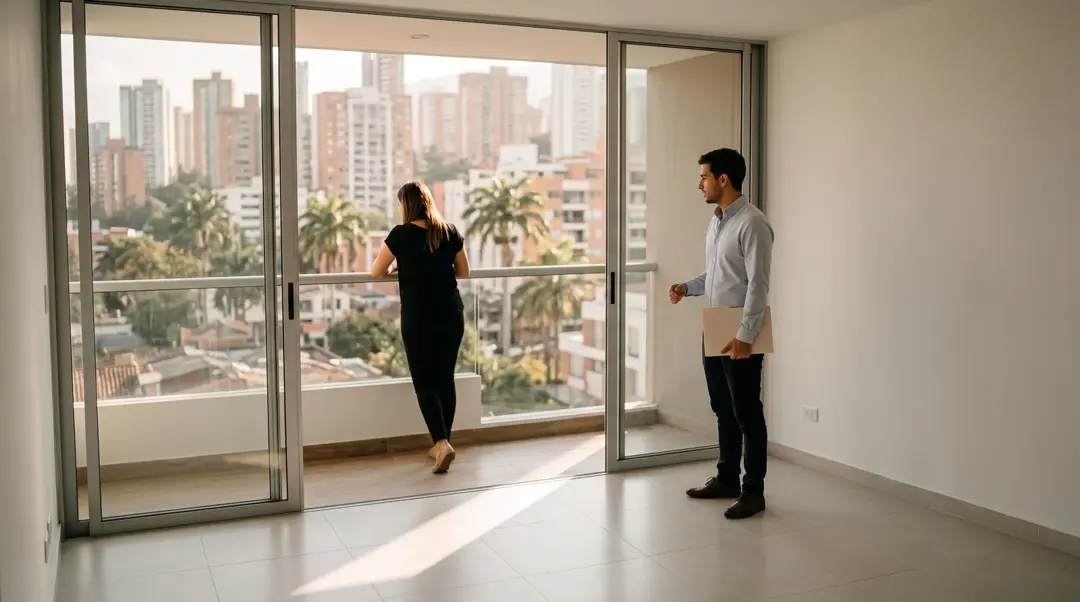
You rented before you bought. A year in a rental turns every abstract preference into a lived one. You find out whether you want the beach at your door or an hour away, whether you use the pool, whether the drive to the supermarket wears on you, and whether your street is quiet at 6am.
You have functional Spanish. Enough to handle a plumber, a pharmacy and a neighbour. The English-speaking scene is real and welcoming, and it also has a ceiling. People who stay tend to have a life on both sides of it.
You have a reason to be somewhere weekly. A class, a volunteer post, a gym, a church, a standing card game. Friendships form around repetition, and arrivals who structure their week make them faster.
Both of you chose it. Departure accounts disproportionately involve one partner who agreed rather than one who wanted it. That is a knowable thing before you fly, if you are willing to ask the question plainly.
Your budget came from your own shopping list. The government food basket, priced monthly by the MEF, measures what it costs a Panamanian household to hit a calorie minimum on a list unchanged since 2015. It is a good statistic doing its own job. Budget from it and then shop for imported cheese and you will feel a gap that was never Panama's fault. Our cost of living guide rebuilds the number properly.
Visit in October, rent through a rainy season
This is the whole method, and it is short enough to act on this week.
Come between May and November. That is the wet half of the year across most of the country. You want to see the afternoon downpours, the roads in them, and how your mood handles a grey week. Plenty of people find they love it, and the ones who love it in October are the ones still here in year five.
Stay a month if you can, not a week. A week is a holiday. A month is a life: groceries, a haircut, a doctor, a bad wifi day, a Sunday with nothing planned.
Then rent for six to twelve months in your leading candidate town. Renting first is normal here and it is the standard advice we give every reader, including people who arrive fully decided. The rental market is deepest in Panama City and the Panamá Oeste beach corridor, so those are the easiest places to land and shop on arrival. In Boquete, Pedasí or Bocas del Toro the formal stock is thinner and much of the furnished short-let market never appears in listings, so line something up before you fly.
Buy after that, with an independent lawyer. By then you will know which street, and the purchase becomes a technical exercise rather than a bet.
Do you need help relocating to Panama?
If you're weighing up the move, a licensed broker who lives here can tell you what the areas are really like to live in, and what your money does in each of them.
Email or phone, whichever you’d rather. We pass your details to one licensed broker and no one else, and there’s no newsletter.
Know your budget and timeline already? Send those instead and get a shortlist →
If a town is not working, change the town
Most of the reasons people give for leaving Panama are reasons for leaving a particular place in Panama. The country is small and the options are genuinely different from one another.
You want walkable daily life. Beach towns and mountain towns are car-dependent, and if you have spent your life walking to a coffee shop, that lands harder than expected. Panama City has neighbourhoods that solve this outright. Our neighbourhood guide compares the districts expats actually pick.
You want specialist healthcare close by. This is the most common reason a mountain or far-coast move stops working, especially after a diagnosis. The answer is the capital, or the beach corridor around Coronado that keeps the capital about an hour away. Our retirement town comparison lays out each town against hospital access.
You want more people around. Social density varies wildly. Boquete has the longest-established foreign community in the country; a quiet coastal town by design has fewer people to meet. If the first months feel thin, a town with more built-in social infrastructure usually fixes it.
You want fewer errands and less paperwork. Residency renewals, licence conversion, banking and vehicle registration involve more steps and more apostilles than most arrivals expect. Being close to the capital, where the offices are, takes most of the friction out. Our driver's licence guide is a good worked example, and living in Panama covers the day-to-day rhythm.
You miss family more than you planned to. Flight cost is checkable in advance; flight frequency is the thing people misjudge. Living within an hour of Tocumen, with direct flights to most of North America and Europe, changes that calculation more than any other single choice.
The two-year rules that actually exist
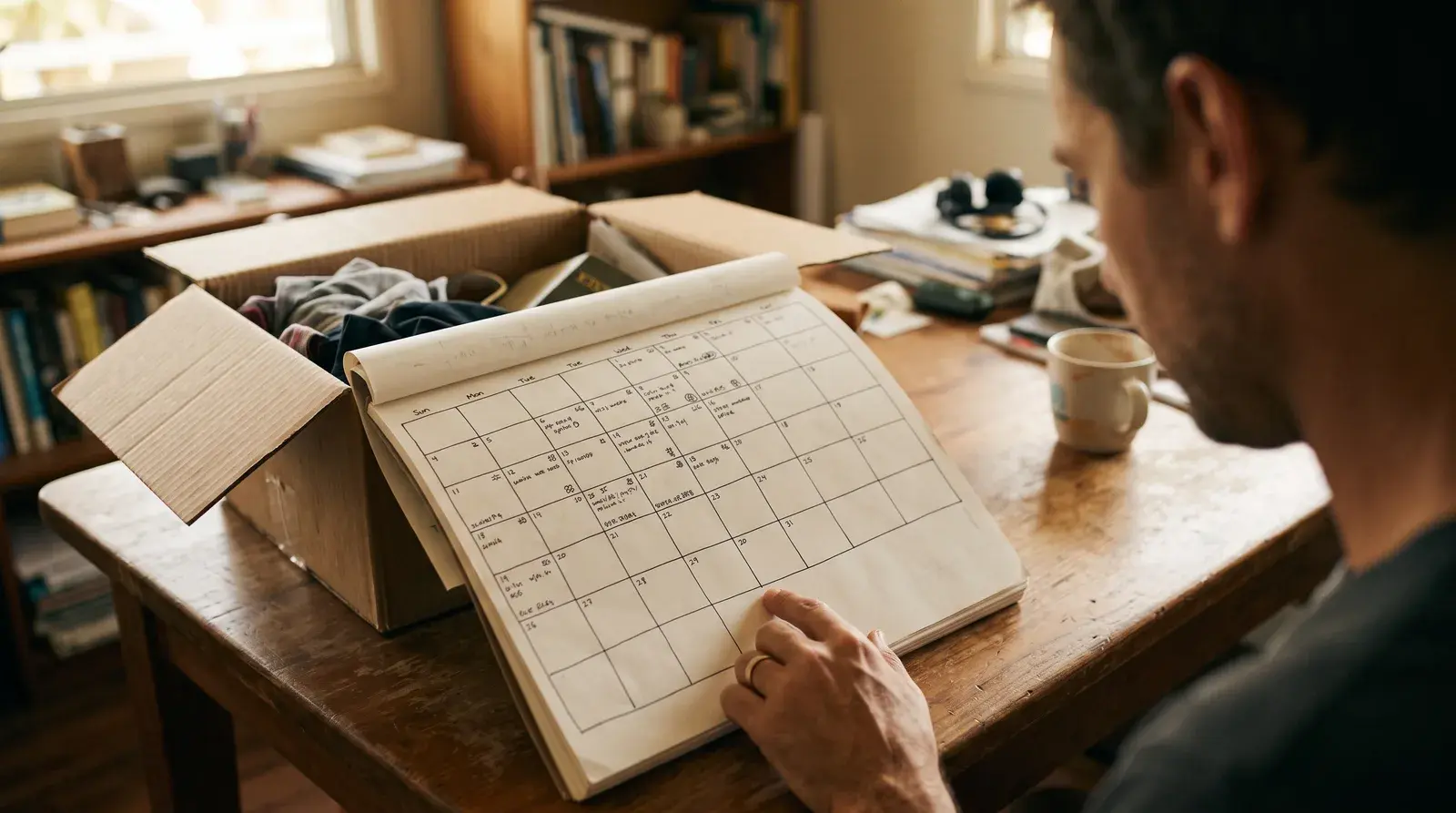
Panama has two real two-year clocks. Both are administrative, both are plannable, and both are worth putting in your calendar the week your residency lands.
Your first permit may only run two years. Under Decreto Ejecutivo 226 of 20 July 2021, Migración grants a residencia provisional, a provisional residence permit, for two years to applicants in the Friendly Nations subcategory, which is the route most North American and European buyers use. Permanence is a second application filed at the end of it, on the same requirements you met at the start. If you qualified by buying property, the Registro Público certificate showing at least B/.200,000 in your own name has to still be true at month twenty-four. Our residency guide sets out the full procedure.
Being away for two years can end a permanent residency. Decreto Ley 3 of 22 February 2008, article 31, lets the Director General of Migración cancel the permanence of a foreigner absent from the national territory for more than two years, unless the absence is justified and authorised. No warning letter goes out first. If a long trip home might turn into a long stay, get the absence authorised in advance with an attorney rather than filing something late. The same law obliges residents to tell Migración about a change of address or any change to the information in the Registro de Extranjería, the foreigners' register, with a hundred-balboa fine for a first lapse.
So when someone describes leaving "after about two years," there is often a paperwork deadline sitting quietly behind it. Diary both dates and neither one surprises you.
What Panama actually counts
Two things are worth knowing about the numbers on this subject, because they shape how you should read anything you find.
The census counts who is here, not who arrived. INEC, the statistics institute, enumerated 249,476 foreign-born residents at the 2023 census: 8,511 born in the United States, 1,451 in Canada, 30,761 in Nicaragua, and 47,358 across Central America as a whole. Panama's foreign population is much more regional than the volume of English-language writing about it implies, which is worth knowing before you picture your neighbours.
The nearest thing to a duration measure counts only the people still here. The same census asked residents aged five and over who had been living abroad when they arrived, and grouped them by period of arrival. Everyone below was present on census night in 2023.
| Period of arrival | Still in Panama, 2023 | Arrived from the US | Arrived from Canada |
|---|---|---|---|
| 2020 to census date | 43,412 | 3,005 | 526 |
| 2015 to 2019 | 34,066 | 2,242 | 327 |
| 2010 to 2014 | 14,772 | 1,637 | 213 |
| 2000 to 2009 | 10,250 | 1,616 | 197 |
| Before 2000 | 8,663 | 765 | 45 |
INEC, XII Censo Nacional de Población y VIII de Vivienda 2023, Volumen III, Cuadro 6. Checked August 2026.
Read it as what it is, a snapshot with useful texture. The counts fall as you go back in time because fewer people arrived in the 1990s than in the 2010s, because the bands are different lengths, and because people move on and pass away, and the table cannot separate those. The country column is place of previous residence rather than nationality, so a Panamanian returning from Miami sits in the same row as an American arriving in Panama City. Nothing in it can be turned into a departure rate, and it does not need to be. Your own fit is a better question than a national average, and it is one you can answer directly.
Your next step
Tell us which two or three towns are on your shortlist, roughly when you could come, and what a good week looks like for you. We will tell you what is realistically available to rent in those towns in that month, which ones fit how you want to live, and what a sensible first year looks like from landing to lease to purchase. Coming in October and renting before you buy is the best decision most movers make, and helping you plan exactly that is what the form below is for.
Frequently asked questions
What is the single most useful thing to do before committing to Panama?
Spend an extended stretch here during the wet season, roughly May to November, and then rent for six to twelve months before buying. Nearly every account of a move that did not work includes some version of "we visited in February." October shows you the half of the year the photographs skip, and it costs you a trip rather than a house.
What actually predicts staying in Panama?
The factors that recur are unglamorous and mostly settleable in advance: enough Spanish to have a life outside the English-speaking scene, a reason to be somewhere on a regular basis, a move both partners genuinely chose rather than one agreeing, a budget built from what you intend to buy, and a town that matches how you want to spend an ordinary Tuesday.
Is there any two-year rule in Panamanian immigration law?
Two, and both are administrative rather than anything to do with how a move is going. Decreto Ejecutivo 226 of 20 July 2021 grants Friendly Nations applicants a provisional residence permit for two years, after which permanence is a separate application on the same requirements. Decreto Ley 3 of 22 February 2008, article 31, lets Migración cancel a permanent resident's status for absence from the national territory of more than two years unless that absence was justified and authorised in advance. Diary both dates.
Should I rent or buy when I first arrive in Panama?
Rent, for six to twelve months, in the town you are most drawn to. A year of living there answers the questions a viewing cannot: whether you want the beach at your door or an hour away, how the drive to the supermarket wears on you, and how your street sounds at 6am. Panama City and the Panamá Oeste beach corridor have the deepest rental stock, so those are the easiest places to land and shop on arrival.
How does Panama's climate really work?
A wet season and a dry season, with no temperate seasonality. IMHPA documents Pacific, Central and Caribbean rainfall patterns, all split the same way. Days do not meaningfully shorten and wardrobes do not change. Plenty of people love it, and the reliable way to find out whether you are one of them is to come in October rather than January.
Is Panama expensive to live in?
That depends almost entirely on what you buy, which is why the budget matters more than the country. The MEF food basket, the figure most often quoted, prices a calorie minimum for a Panamanian household on a shopping list fixed since 2015. It is doing its own job well and it is not an expat grocery bill. Build your budget from your own shopping list and your own rent and the number will hold.
How many foreigners live in Panama?
The 2023 census counted 249,476 foreign-born residents, of whom 8,511 were born in the United States and 1,451 in Canada, against 30,761 born in Nicaragua and 47,358 across Central America as a whole. It is a snapshot of one night rather than a flow, and it shows a foreign population far more regional than English-language writing about Panama suggests.
What if the town I choose turns out not to suit me?
Change the town rather than the country, because Panama's options differ sharply from one another. If you want walkable daily life or specialist healthcare nearby, the capital solves both, and the Coronado beach corridor keeps the capital about an hour away. If you want cooler air and an established foreign community, Boquete has the longest-running one. Our retirement town comparison lays each out side by side.
Sources
- Decreto Ley No. 3 de 22 de febrero de 2008 (Gaceta Oficial 25986), arts. 31.3 y 87 — checked 2026-08-05
- Decreto Ejecutivo No. 226 de 20 de julio de 2021 (Gaceta Oficial 29335), art. 3, residencia provisional de dos años — checked 2026-08-05
- Decreto Ejecutivo No. 197 de 7 de mayo de 2021 (Gaceta Oficial 29290-A), solicitud de Residencia Permanente tras los dos años — checked 2026-08-05
- Servicio Nacional de Migración — catálogo de datos abiertos (residencias aprobadas y negadas, 2024) — checked 2026-08-05
- INEC, Censo 2023, Volumen III — Cuadro 5, población nacida en el extranjero por país de nacimiento — checked 2026-08-05
- INEC, Censo 2023, Volumen III — Cuadro 6, población que residía en el extranjero según período de llegada — checked 2026-08-05
- INEC — Movimiento Internacional de Pasajeros (entradas y salidas por puerto, año 2024) — checked 2026-08-05
- IMHPA — Régimen Pluviométrico de Panamá (Pacific, Central and Caribbean seasonal rainfall patterns) — checked 2026-08-04
- IMHPA — Antecedentes de la Red Hidrometeorológica Nacional de Panamá — checked 2026-08-04
- MEF, DAES — Canasta Básica Familiar de Alimentos, marzo de 2026 (con resumen metodológico) — checked 2026-08-04
Do you need help relocating to Panama?
If you're weighing up the move, a licensed broker who lives here can tell you what the areas are really like to live in, and what your money does in each of them.
Email or phone, whichever you’d rather. We pass your details to one licensed broker and no one else, and there’s no newsletter.
Know your budget and timeline already? Send those instead and get a shortlist →